Call Us : +91-98728-01739 or Email us: sugamhealings@yahoo.com

Introduction
A Transpersonal Approach to Dealing with Grief: Navigating the Depths of Loss honours grief as both a psychological process and a sacred human experience. While grief is often approached as something to “get through,” a transpersonal lens invites us to listen, feel, and allow grief to transform us. When grief is met with presence and compassion, it becomes a gateway to deeper meaning, connection, and healing.
Loss changes the nervous system, the heart, and the sense of self. Therefore, true healing requires more than time or distraction. It requires a space where emotion, body, and soul are all welcomed.
Understanding Grief Beyond Stages
Traditional models describe grief in stages. While helpful, these models can feel limiting. Grief rarely moves in a straight line.
Clinically, grief is a dynamic process involving emotion, memory, and nervous system responses. Waves of sadness, anger, longing, and numbness may arise unpredictably. This fluctuation is normal.
A transpersonal approach respects this nonlinearity. Instead of pushing grief forward, it allows grief to unfold organically.
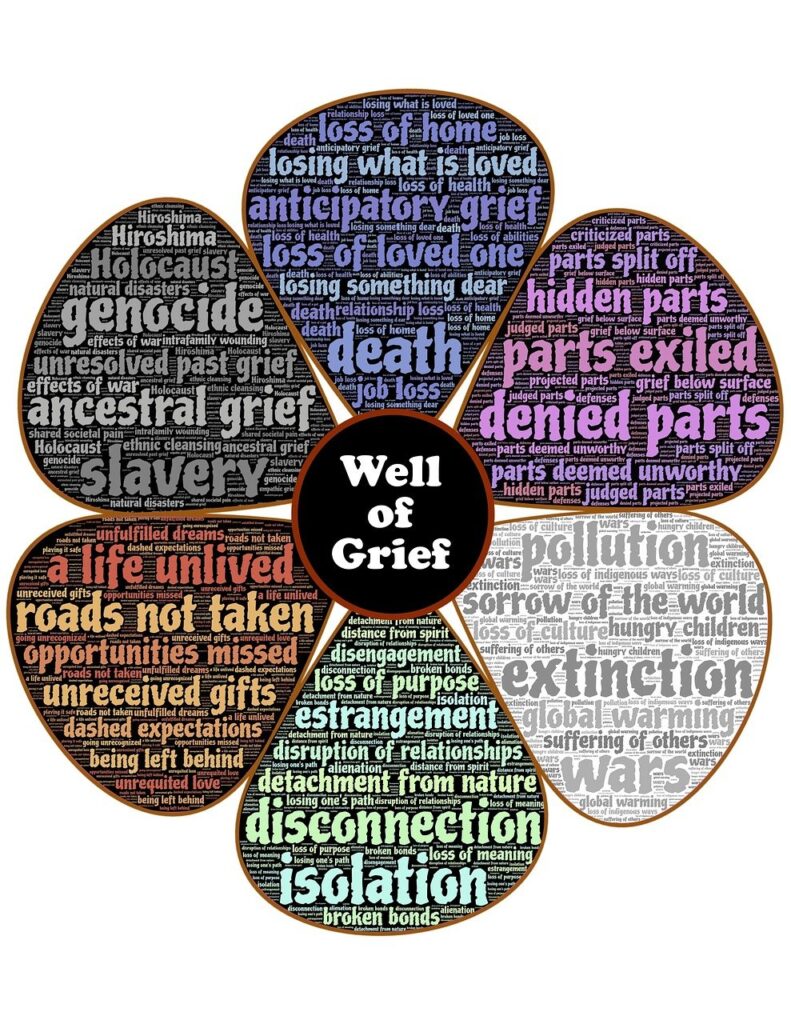
What Makes Grief Traumatic
Not all grief is traumatic. However, sudden, unresolved, or complicated losses often overwhelm the nervous system. When support is lacking, the body remains in shock.
Neuroscience shows that loss activates attachment circuits in the brain. Separation distress can resemble physical pain. Therefore, grief is felt deeply in the body.
When grief is not processed, it may manifest as anxiety, depression, or physical symptoms. Understanding this helps remove self-judgment.
The Nervous System and Grief
Grief is a nervous system experience. Initially, the system may enter a state of shock or freeze. Later, waves of activation may follow.
Regulation becomes essential. Without safety, grief feels unbearable. With regulation, grief becomes tolerable and meaningful.
A transpersonal approach supports the nervous system while honouring emotional depth. Safety and surrender coexist.
What Is Transpersonal Grief Therapy?
Transpersonal grief therapy integrates psychology with spirituality and consciousness-based understanding. It does not pathologise grief. Instead, it recognises grief as a response to love and connection.
Clinically, this approach supports emotional processing, nervous system regulation, and the creation of meaning. Spiritually, it explores continuity, purpose, and soul connection.
Together, these dimensions allow grief to transform rather than fragment the self.
Grief Processing, Loss, and Soul Connection
Grief processing, loss, and soul connection are deeply intertwined. Loss often opens existential questions. Meaning, faith, and identity may be shaken.
Transpersonal work allows these questions to be explored gently. Rather than offering answers, it creates space for inner knowing to emerge.
Many people report a renewed sense of connection after grief. Love does not disappear; it changes form.

The Body’s Experience of Grief
Grief is held in the body as heaviness, tightness, or fatigue. Breathing may feel shallow. Posture may collapse.
Somatic awareness helps bring gentle attention to these sensations. When sensations are met with compassion, they soften.
The body then releases grief gradually, at its own pace.
Why Avoiding Grief Prolongs Suffering
Avoidance is a natural response to pain. However, unexpressed grief often resurfaces later. It may appear as irritability, numbness, or chronic stress.
Psychology shows that emotional suppression increases physiological stress. Therefore, allowing grief actually reduces suffering over time.
A transpersonal approach encourages expression without overwhelm. Grief is welcomed, not forced.
A Transpersonal Approach to Dealing with Grief for Emotional Healing and Spiritual Integration
A transpersonal approach to dealing with grief for emotional healing and spiritual integration supports both the heart and the larger meaning of loss. Emotional healing occurs when grief is felt fully. Spiritual integration occurs when loss is woven into life’s story.
This integration does not erase pain. Instead, it allows pain to coexist with love, memory, and purpose.
Healing then feels expansive rather than constricting.
Inner Child Aspects of Grief
Loss often activates earlier experiences of separation. The inner child may feel abandoned or unsafe. These feelings may not match the present situation.
Inner child work helps identify and soothe these younger parts. When they feel held, grief becomes less overwhelming.
Adult presence strengthens as compassion increases.
Energy Body Perspectives on Grief
From an energetic perspective, grief can create contraction around the heart. Energy may feel blocked or heavy.
Gentle energy awareness allows this contraction to soften. As awareness expands, energy flows again.
Spiritually, this opening restores connection with love rather than loss alone.
Meditation as a Support for Grief
Meditation supports grief by cultivating presence. It does not remove pain. Instead, it creates space around pain.
Trauma-informed meditation emphasises grounding and choice. Short moments of awareness build tolerance.
Over time, stillness becomes a refuge rather than a threat.
When Grief Needs Support
Grief deserves support, not endurance. Persistent numbness, despair, or isolation signal the need for help.
Seeking support is not weakness. It is an act of self-care.
Transpersonal therapy offers a compassionate container for this support.
Grief as a Teacher, Not an Enemy
Grief teaches vulnerability, compassion, and humility. It deepens empathy. It reshapes priorities.
While painful, grief often awakens inner wisdom. Life feels more precious.
This transformation honours the depth of love that preceded loss.
A Gentle Invitation to Heal Through Grief
A Transpersonal Approach to Dealing with Grief: Navigating the Depths of Loss offers a way to honour pain while rediscovering meaning and connection. Grief does not need to be rushed or fixed. It needs to be held.
At Sugam Healings, one-to-one sessions under Unravelling the Subconscious Mind support grief through trauma-informed, compassionate, and spiritually grounded care. Emotional processing, nervous system regulation, and soul-level integration are gently woven together.
If you are navigating loss and seeking a space where your grief is respected and supported, you are warmly invited to connect. Visit www.sugamhealings.com to begin a healing journey that honours both your pain and your inner strength.
Healing Outcomes
Experience deep emotional healing and mental clarity as you release stress, anxiety, and past traumas. With Chakra Balancing, Somatic Trauma Healing, and Energy Therapy, you’ll feel lighter, more positive, and fully aligned with your true self.
Our healing sessions bring lasting transformation by rewiring subconscious patterns and restoring mind-body harmony. Say goodbye to emotional wounds, negative thoughts, and self-doubt, and embrace spiritual awakening and personal growth.
Beyond healing, you’ll attract positivity, success, and fulfilment in life. As you align with your higher self, relationships improve, intuition strengthens, and a deeper sense of purpose and joy unfolds.

Connect
with your counselor
Kanwal Bedi
Transpersonal Healing Therapist
- sugamhealings@yahoo.com
- Attend An Info Session