Call Us : +91-98728-01739 or Email us: sugamhealings@yahoo.com

How Trauma Healing Helps Release Emotional Pain
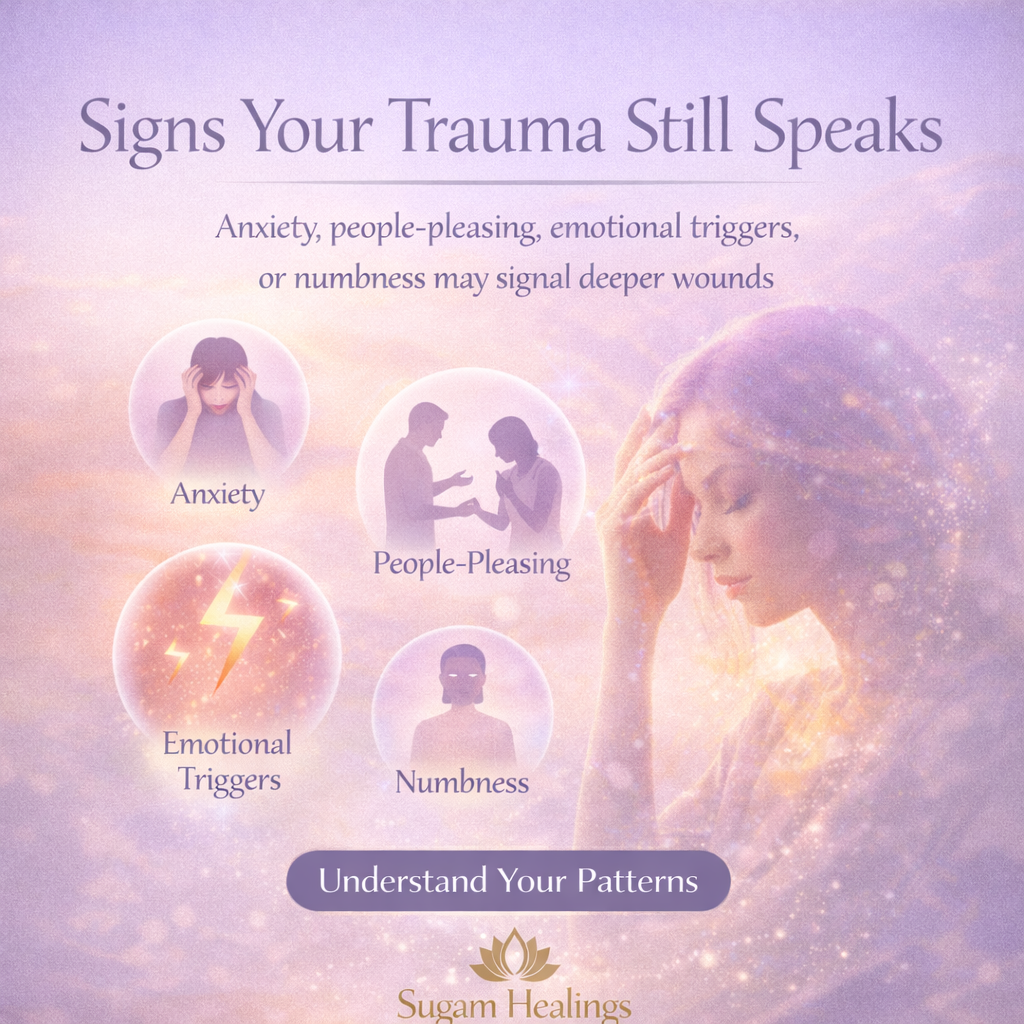
How Trauma Healing Helps Release Emotional Pain is not only a psychological question. It is also a deeply human and spiritual question.
Many people carry emotional pain for years, not because they are weak, but because the mind, body, and subconscious have not yet felt safe enough to release what was once overwhelming.
Trauma can live beneath the surface of daily life. A person may appear successful, responsible, and functional, yet still feel anxious, heavy, reactive, numb, or disconnected inside.
Therefore, emotional trauma healing must look deeper than symptoms alone.
True healing begins when we understand that trauma is not just an event from the past. Rather, it is the imprint that remains in the nervous system, subconscious mind, emotional body, and inner world.
Table of Contents
ToggleUnderstanding Trauma Beyond the Event
Trauma is often misunderstood as something that happens only after extreme or dramatic events. However, trauma can also arise from repeated emotional neglect, criticism, rejection, abandonment, betrayal, humiliation, grief, shock, or prolonged stress.
In simple words, trauma is not always what happened. It is what happened inside you because of what happened.
For example, two people may go through similar events, yet their inner responses may differ. One person may recover with support, while another may carry fear, shame, or emotional pain for years. Therefore, trauma is deeply personal.
Clinically, trauma affects the way the brain and body process safety. The nervous system may continue to behave as if danger is still present, even when life has moved forward. As a result, the person may feel emotionally stuck.
Spiritually, trauma can be seen as a fragmentation of inner wholeness. A part of the self may remain frozen in the moment of pain, still waiting to be seen, heard, and lovingly integrated.
Why Emotional Pain Remains Stored Inside
Emotional pain often remains because it was never fully processed. At the time of trauma, the mind may not have had the support, maturity, or safety needed to feel and release the pain.
Therefore, the body may store what the conscious mind could not process.
This stored pain may later appear as anxiety, sadness, anger, shame, guilt, emotional numbness, or relationship difficulties. Sometimes, it may also show up as physical tightness, fatigue, digestive discomfort, sleep disturbance, or chronic restlessness.
The subconscious mind plays a powerful role here. It stores emotional memories, beliefs, survival responses, and protective patterns. Because of this, a person may consciously say, “I want to move on,” yet subconsciously continue to feel unsafe.
For this reason, emotional trauma healing must work gently with the deeper layers of the self. It must include the mind, body, emotions, energy, and consciousness.
How Trauma Affects the Brain and Nervous System
From a scientific perspective, trauma can influence important brain systems connected to fear, memory, and emotional regulation.
The amygdala, which detects threat, may become overactive. Because of this, a person may feel anxious or triggered even in ordinary situations.
The hippocampus, which helps organize memories, may struggle to place traumatic memories in the past. As a result, the body may react as though the old pain is happening again.
The prefrontal cortex, which supports reasoning and emotional regulation, may become less available during stress. Therefore, a person may know logically that they are safe, yet still feel fear in the body.
This is why trauma survivors often say, “I understand everything, but I still feel it inside.”
That sentence reveals the difference between intellectual understanding and deep healing. Insight is important, but the nervous system also needs safety, regulation, and emotional release.
How Trauma Healing Helps Release Emotional Pain
How Trauma Healing Helps Release Emotional Pain can be understood through one core principle: healing creates safety where there was once overwhelm.
When a person feels safe, the mind and body can slowly process what was previously too painful. The frozen emotional energy begins to move. The inner system starts to complete what was left incomplete.
Trauma healing does not force a person to relive the past. Instead, it helps them meet the wounded parts of themselves with compassion, awareness, and support.
Gradually, the person may begin to understand their triggers. They may notice why certain situations feel threatening. They may also discover the deeper emotional roots behind their reactions.
For example, fear of rejection may come from childhood abandonment. People-pleasing may come from a need to stay emotionally safe. Anger may protect old grief. Numbness may protect the heart from feeling too much.
As these patterns become conscious, healing begins.
Releasing Emotional Pain Naturally and Gently
Many people search for how trauma healing helps release emotional pain naturally because they want a deeper and safer way to heal. Natural healing does not mean doing nothing. Rather, it means working with the intelligence of the mind, body, and soul instead of fighting them.
Gentle trauma healing may include breath awareness, grounding, inner child work, somatic awareness, hypnotherapy, regression therapy, meditation, energy work, and compassionate self-inquiry.
These approaches help the person slow down and listen within. They also support emotional release without forcing the process.
For example, a person may begin by simply noticing where sadness lives in the body. They may place a hand on the heart and breathe with kindness. Then, with therapeutic support, they may allow old feelings to surface safely.
In this way, emotional pain is not pushed away. Instead, it is witnessed, understood, and released layer by layer.
The Role of Inner Child Healing
Inner child healing is a powerful pathway for trauma recovery. Many unresolved emotional wounds begin in childhood, when the child did not have the words, power, or support to process pain.
The inner child may still carry fear, shame, loneliness, anger, or helplessness. Therefore, adult life may activate these old wounds through relationships, criticism, rejection, or conflict.
For example, a small disagreement may trigger deep panic. A delayed reply may create fear of abandonment. A mistake may activate intense shame.
These reactions may seem excessive in the present. However, they often make sense when seen through the lens of the wounded inner child.
Inner child healing helps the adult self reconnect with these younger parts. Through compassion, reassurance, and therapeutic presence, the person begins to offer safety where there was once fear.
This process can be profoundly healing. It helps the person stop judging their reactions and start understanding their pain.
The Subconscious Mind and Trauma Patterns
The subconscious mind holds the deeper programming of life. It stores emotional associations, beliefs, memories, and protective responses.
After trauma, the subconscious may create beliefs such as:
“I am not safe”
“I cannot trust anyone”
“I am not worthy”
“I must please others to be loved”
“I must stay in control”
“I should not express my emotions.
These beliefs may operate silently. Yet, they can influence relationships, health, confidence, choices, and emotional well-being.
In therapeutic work, the subconscious mind can be accessed gently through deep relaxation, guided imagery, hypnotherapy, regression, and meditative states. These states help the person move beyond surface thinking.
As the subconscious patterns become visible, the person can release old emotional charge. They can also create new inner meanings rooted in safety, dignity, and self-trust.
This is one reason, the work of “Unravelling the Subconscious Mind” can be so meaningful. It invites the person to look beneath symptoms and meet the deeper truth within.
Trauma Healing and the Energy Body
From a spiritual perspective, emotional pain is not only mental. It may also be felt as heaviness, contraction, blockage, or disturbance in the energy body.
Many people describe trauma as a weight on the chest, a knot in the stomach, tightness in the throat, or a sense of being disconnected from life. Although these experiences may have psychological roots, they are also felt energetically.
Energy work can support healing by helping the person reconnect with flow, presence, and inner balance. It may help soften emotional heaviness and restore a felt sense of wholeness.
However, spiritual healing must be grounded. It should not bypass emotional pain or encourage people to deny their human experience.
True spiritual healing includes the body, emotions, and shadow. It does not rush forgiveness. Instead, it creates space for truth, grief, anger, love, and integration.
Meditation as a Support for Trauma Healing
Meditation can support trauma healing when practiced gently and safely. It helps the person develop witness consciousness, which means the ability to observe thoughts and emotions without becoming fully identified with them.
However, trauma-sensitive meditation is important. Some people may feel overwhelmed when they close their eyes or sit in silence. Therefore, meditation should be adapted to the person’s nervous system.
Simple grounding practices can be helpful. For example, feeling the feet on the floor, noticing the breath, observing sounds, or placing a hand on the heart can create safety.
Over time, meditation helps a person relate to inner pain with more spaciousness. Instead of saying, “I am broken,” they may begin to say, “A part of me is hurting, and I can meet it with compassion.”
This shift is deeply healing.
What Emotional Release May Feel Like
Emotional release does not always look dramatic. Sometimes, it feels like a deep breath after years of holding. Sometimes, it feels like tears that finally come. Other times, it may feel like warmth, clarity, softness, or quiet relief.
At times, a person may feel tired after a session. This can happen because the inner system has processed something significant. Therefore, rest and self-care are important.
Healing may also bring new awareness. A person may suddenly understand why they react in certain ways. They may feel compassion for themselves instead of shame.
Gradually, emotional triggers may reduce. The body may feel safer. Relationships may become healthier. The person may feel more present, grounded, and connected.
This is the quiet beauty of trauma healing.
Why Trauma Healing Is Not About Forgetting
Many people believe healing means forgetting the past. However, healing does not erase memory. Instead, it changes the emotional relationship with the memory.
A painful memory may remain, but it no longer controls the present. The nervous system learns that the danger has passed. The heart learns that it can open again.
Therefore, healing is not denial. It is integration.
The past becomes part of the life story, but it no longer defines the whole self. The person begins to reclaim choice, voice, dignity, and inner freedom.
This is where science and spirituality meet. The nervous system finds regulation, and consciousness finds expansion.
How Trauma Healing Helps Release Emotional Pain in Daily Life
How Trauma Healing Helps Release Emotional Pain becomes visible in ordinary life. A person may respond instead of React. They may set boundaries without guilt. They may stop repeating painful relationship patterns.
Furthermore, they may also feel more comfortable in their body. They may sleep better, breathe deeper, and feel less controlled by fear.
Additionally, they may begin to trust their intuition. When emotional pain clears, inner wisdom becomes easier to hear.
This does not mean life becomes perfect. Rather, the person becomes more resourced, aware, and compassionate toward themselves.
Healing gives them a new relationship with life.
A Gentle Therapeutic Reflection
If you are carrying emotional pain, pause for a moment.
Place one hand on your heart. Take a slow breath. Then gently ask yourself:
“What part of me is still hurting?”
“What emotion have I not allowed myself to feel?”
“What does my inner self need from me today?”
Do not force an answer. Instead, listen softly.
Sometimes, healing begins with one honest moment of self-connection.
Healing at Sugam Healings
At Sugam Healings, trauma healing is approached with compassion, depth, and respect for your inner journey. The work is not about fixing you because you are not broken.
Instead, it is about helping you understand the emotional roots of your pain. It is about supporting the release of old wounds from the subconscious mind, nervous system, emotional body, and energy field.
Through one-to-one therapeutic sessions under “Unravelling the Subconscious Mind,” the process may include trauma work, inner child healing, transpersonal regression therapy, energy work, and meditation.
Each session honours your pace. Every layer is approached with care. Each wound is met with dignity.
If you feel emotionally heavy, anxious, stuck, or disconnected, your pain may be asking for compassionate attention. Healing is possible, and you do not have to walk the path alone.
To begin your healing journey, visit www.sugamhealings.com or connect with Sugam Healings for a one-to-one therapeutic session.
Frequently Asked Questions
What is trauma healing?
Trauma healing is a therapeutic process that helps a person process and release the emotional, mental, physical, and energetic impact of painful experiences. It supports the nervous system, subconscious mind, and emotional body in finding safety and balance again.
How Trauma Healing Helps Release Emotional Pain?
How Trauma Healing Helps Release Emotional Pain can be understood through safety, awareness, and integration. When the mind and body feel safe, unresolved emotions can surface, be understood, and gradually released.
What is emotional trauma healing?
Emotional trauma healing focuses on the emotional pain, fear, shame, grief, and protective patterns that remain after distressing experiences. It helps a person reconnect with inner safety, self-compassion, and emotional freedom.
Can trauma healing help with anxiety?
Yes, trauma healing may help when anxiety has emotional roots. Many people experience anxiety because the nervous system still feels unsafe due to experiences, unresolved wounds, or subconscious fear patterns.
Is trauma healing only for major trauma?
No, trauma healing is not only for major trauma. It can also support people who experienced emotional neglect, rejection, criticism, relationship pain, grief, childhood wounds, or repeated stress.
How long does trauma healing take?
The healing process is different for every person. Some people feel relief in a few sessions, while deeper trauma patterns may need more time, consistency, and therapeutic support.
Is inner child healing useful for trauma?
Yes, inner child healing can be very helpful when trauma has roots in childhood experiences. It allows wounded younger parts of the self to feel seen, heard, protected, and emotionally supported.
Can trauma healing be spiritual?
Yes, trauma healing can be both clinical and spiritual. While psychology supports emotional processing and nervous system regulation, spirituality helps reconnect a person with inner wisdom, meaning, compassion, and wholeness.