Call Us : +91-98728-01739 or Email us: sugamhealings@yahoo.com
Chakra Balancing: Aligning Your Energy Centres for Wellness
You may feel physically tired even after resting, emotionally unsettled without knowing why, or disconnected from yourself despite life appearing reasonably fine on the outside.
Within traditional yogic and holistic systems, experiences like these are sometimes explored through Chakra Balancing: Aligning Your Energy Centres for Wellness.
The chakra system offers a symbolic and spiritual map for understanding different aspects of human experience—from safety and self-worth to emotional connection, expression and meaning.
However, it is important to approach this framework responsibly. Chakras belong to traditional spiritual and energetic systems; they are not recognised as anatomical organs or scientifically established energy structures in Western medicine.
Used thoughtfully, chakra work can therefore become less about “fixing blocked energy” and more about asking: Where in my life do I feel grounded, connected and able to express myself—and where do I feel contracted or disconnected?
Table of Contents
ToggleWhat Is Chakra Balancing?
The word chakra comes from Sanskrit and is commonly translated as “wheel” or “circle.” In several South Asian yogic and tantric traditions, chakras are understood as centres within the subtle or energetic body.
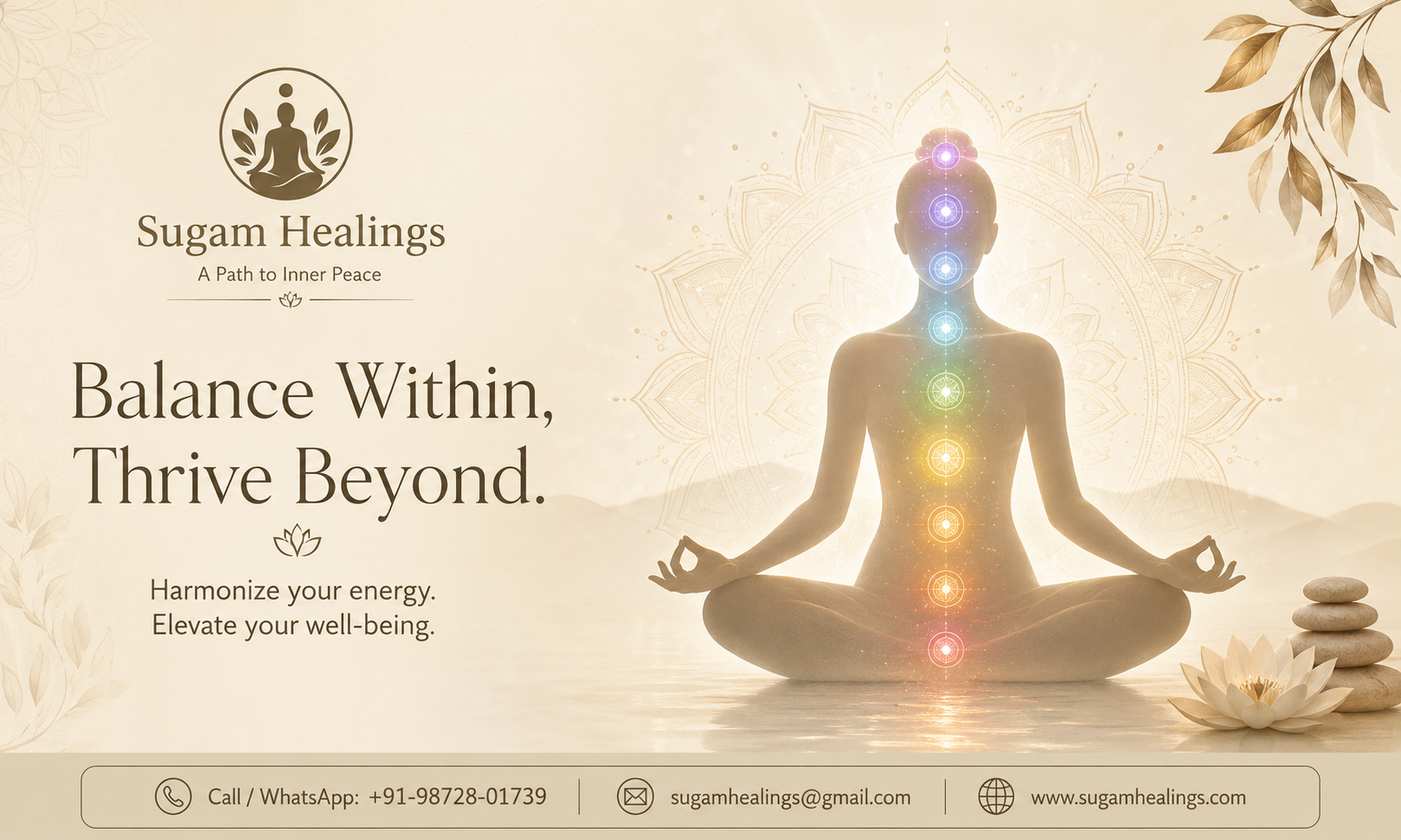
Modern wellness practice commonly refers to seven main chakras, symbolically located from the base of the spine to the crown of the head. Different traditions have described chakra systems in different ways, so the familiar seven-chakra model should be understood as an influential framework rather than a universal anatomical system.
Chakra healing or balancing generally refers to practices intended to bring greater awareness and harmony to these different dimensions of experience.
That may involve meditation, mindful breathing, body awareness, movement, visualisation or other energy-based practices.
The Seven Energy Centres and What They Traditionally Represent
The chakra system can be viewed as a reflective map rather than a diagnostic tool.
Root Chakra — Muladhara
Traditionally associated with grounding, safety, stability and belonging.
Reflection: Do I generally feel secure and supported in my life?
Sacral Chakra — Svadhisthana
Often connected with emotion, creativity, pleasure and relationships.
Reflection: Can I experience and express emotions without immediately judging them?
Solar Plexus Chakra — Manipura
Associated with personal agency, confidence, boundaries and self-worth.
Reflection: Can I make choices that reflect my needs and values?
Heart Chakra — Anahata
Traditionally linked with connection, compassion, giving and receiving love.
Reflection: Can I remain connected to others without abandoning myself?
Throat Chakra — Vishuddha
Associated with communication and authentic expression.
Reflection: Can I express what I genuinely feel and need?
Third-Eye Chakra — Ajna
It is connected traditionally with awareness, insight and inner perception.
Reflection: Can I observe my patterns clearly rather than reacting automatically?
Crown Chakra — Sahasrara
Often associated with meaning, spiritual awareness and connection with something larger than oneself.
Reflection: What gives my life meaning beyond achievement and responsibility?
These associations come from spiritual and contemporary chakra traditions rather than established biomedical anatomy.
Chakra Balancing: Aligning Your Energy Centres for Wellness in Everyday Life
One misunderstanding about energy centre alignment is that every difficult emotion indicates a “blocked chakra.”
Human beings experience tiredness, sadness, irritability, fear, grief and uncertainty for many reasons. Stress, relationships, physical health, sleep, environment, life transitions and unresolved emotional experiences can all contribute.
Instead of immediately labelling an experience as an energetic blockage, chakra work can encourage curiosity.
You might ask:
- Where do I repeatedly feel tension or contraction?
- Which emotions are difficult for me to acknowledge?
- Where am I over-giving or under-expressing?
- What situations make me feel grounded?
- Where does my behaviour contradict what I genuinely need?
This shifts chakra balancing from a search for something “wrong” toward deeper self-awareness.
How to Balance Your Chakras for Emotional and Physical Wellness
No scientifically established technique can objectively “rebalance” chakras. However, several practices commonly incorporated into chakra work—especially meditation, mindfulness and gentle body awareness—may support relaxation and emotional regulation for some people.
Research on mindfulness suggests potential benefits for stress, anxiety and some aspects of emotional well-being, although evidence varies by condition and practice. It should not replace appropriate healthcare.
Begin With the Body
Before analysing what an emotion means, notice what your body is communicating.
Is your breathing shallow? Are your shoulders tense? Does your chest feel constricted? Are you restless?
Simply observing sensation without immediately trying to change it can build body awareness.
Use Breath and Mindfulness
Sit comfortably and bring attention to your breathing for several minutes.
Rather than trying to create a particular spiritual experience, notice what is already present.
This makes the practice grounded rather than performative.
Reflect on One Energy Centre at a Time
You do not have to “balance all seven chakras” in one sitting.
If boundaries are difficult, you might reflect on themes traditionally associated with the solar plexus. If communication feels restricted, throat-chakra symbolism may provide useful questions.
The value lies in what the reflection helps you recognise.
Journal Beyond the Chakra Label
Instead of writing, “My heart chakra is blocked,” try asking:
“Where am I protecting myself from connection, and what might that protection be trying to prevent?”
That question moves from label to understanding.
Chakra Balancing, Attachment and Relationship Trauma
Relationship experiences can strongly influence how safe we feel expressing needs, receiving closeness or setting boundaries.
Attachment theory provides a psychological framework for understanding some of these patterns. Research has found meaningful associations between attachment insecurity and post-traumatic stress responses, although attachment style is only one part of a much more complex picture.
Someone who has experienced repeated rejection, betrayal or emotional unpredictability may, for example, become highly alert to signs of disconnection.
From a chakra perspective, that person might describe difficulties around the heart, throat or solar plexus centres.
From a psychological perspective, we might explore safety, attachment learning, boundaries and emotional regulation.
These frameworks can coexist as different ways of making meaning, but they should not be presented as scientifically identical.
What About Quantum Theory and Energy Healing?
The word “quantum” is sometimes used in spiritual discussions to explain energy, interconnectedness or consciousness.
Here, precision matters.
Quantum theory is a branch of physics describing the behaviour of matter and energy at extremely small scales, including atoms and subatomic particles. Its concepts have led to technologies such as lasers, transistors and quantum sensors.
However, quantum mechanics does not currently provide scientific proof that chakras exist or that relationship trauma creates measurable chakra blockages.
Quantum ideas can sometimes be used metaphorically in spiritual conversations, but a metaphor should not be presented as scientific validation.
This distinction allows us to respect both spiritual exploration and scientific integrity.
How Personalised Therapeutic Support May Complement Chakra Healing
For some people, chakra practices remain a useful personal reflection or meditation practice. Others discover that the emotions underneath the symbolism need more personalised exploration.
At Sugam Healings, relevant approaches may include:
Energy-Based Chakra Work
Within a holistic framework, chakra balancing may help a person explore themes such as grounding, emotional connection, self-expression and personal meaning.
The intention is awareness and alignment rather than guaranteeing a medical or psychological outcome.
Mindfulness and Meditation
Mindfulness may support present-moment awareness and help you notice thoughts, emotions and bodily responses before reacting automatically.
This can complement energy-centre reflection with a grounded daily practice.
Somatic Awareness
Sometimes emotional experiences are noticed first as tension, heaviness, restlessness or constriction.
Gentle body awareness may help someone recognise these responses without forcing interpretation or emotional release.
Authority-Building CTA Section
Balance Is Not About Feeling Peaceful All the Time
A balanced inner life does not mean never becoming anxious, angry, tired or emotionally unsettled.
It means gradually becoming better able to recognise what is happening within you and respond with awareness rather than automatically fighting, suppressing or judging every uncomfortable experience.
That is perhaps one of the most useful ways to approach Chakra Balancing: Aligning Your Energy Centres for Wellness—not as a promise that seven invisible centres can remove every difficulty, but as a structured invitation to explore your relationship with safety, emotion, confidence, connection, expression, awareness and meaning.
If chakra work brings useful reflection, personal practices may be enough. However, when recurring emotional patterns, relationship difficulties or unresolved experiences repeatedly interfere with everyday life, personalised support may offer a safer and deeper space to understand what lies beneath them.
Sugam Healings integrates mindful awareness, energy-based work and appropriate therapeutic exploration according to the individual’s needs and readiness.
FAQs
What is chakra balancing?
Chakra balancing is a holistic or spiritual practice based on the idea of subtle energy centres within the body. Practices may include meditation, breath awareness, movement, visualisation and energy-based work. Chakras are part of traditional spiritual frameworks rather than scientifically established anatomical structures.
How do I know which chakra needs balancing?
Rather than diagnosing a “blocked” chakra from one symptom, consider the life themes traditionally associated with each centre. For example, difficulties with boundaries may prompt reflection around personal agency, while difficulty expressing yourself may invite reflection around communication. Physical or persistent psychological symptoms should also receive appropriate professional assessment.
Can chakra healing improve emotional wellness?
Chakra healing may provide a meaningful framework for self-reflection for people who resonate with it. Practices commonly paired with chakra work, such as mindfulness and meditation, have some evidence for supporting stress management and emotional well-being. However, chakra balancing itself should not be presented as a proven treatment for mental or physical illness.
Can chakra balancing help with relationship difficulties?
It may help you reflect on themes such as boundaries, trust, self-worth, communication and emotional connection. However, persistent relationship distress may involve attachment patterns, learned responses, current relationship dynamics or past experiences that deserve more direct therapeutic exploration.
Is chakra balancing scientifically proven?
The chakra system is a traditional spiritual and energetic framework and is not recognised by contemporary Western science as a set of measurable anatomical energy centres. That does not prevent someone from using chakra symbolism for meditation or reflection, but spiritual belief and scientific evidence should remain clearly distinguished.