Call Us : +91-98728-01739 or Email us: sugamhealings@yahoo.com
How Positive Emotions Support Inner Healing
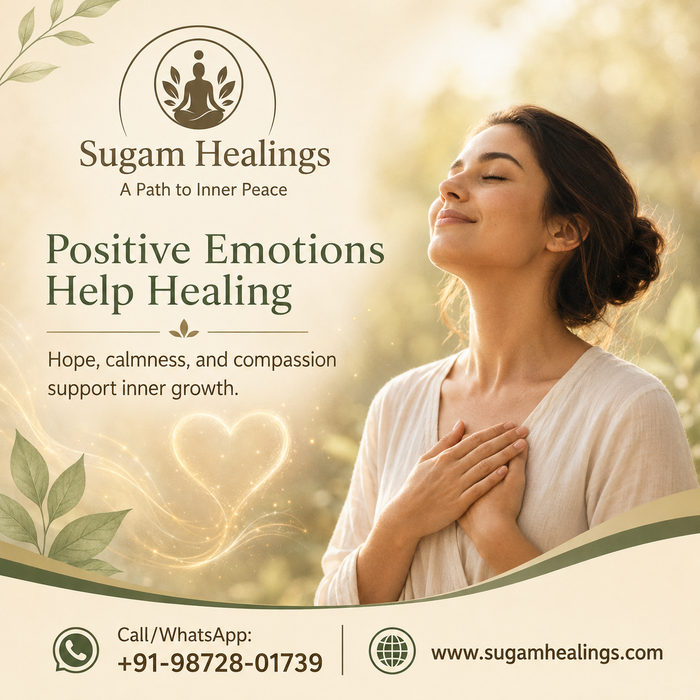
How Positive Emotions Support Inner Healing is an important question for anyone carrying emotional wounds, anxiety, grief, relationship pain, or old trauma. Many people believe healing means only revisiting pain, but healing also needs moments of safety, hope, calmness, and emotional strength.
Positive emotions do not deny pain. Instead, they create inner space, so the mind and body can process difficult experiences without feeling completely overwhelmed.
Table of Contents
ToggleHow Positive Emotions Support Inner Healing in Daily Life
Inner healing is not only about removing sadness, fear, or anger. It is also about slowly rebuilding trust, emotional balance, and a deeper connection with yourself.
Therefore, positive emotions become powerful support during the healing journey. Feelings such as hope, gratitude, compassion, calmness, and love help the nervous system feel safer.
When a person feels emotionally safer, they can look at painful memories with more stability. As a result, healing becomes less forced and more natural.
Why Emotional Pain Often Feels So Heavy
Emotional wounds often come from experiences where a person felt helpless, rejected, unsafe, unseen, or deeply hurt. Over time, these experiences may create anxiety, overthinking, emotional numbness, anger, or relationship fear.
Moreover, unresolved pain can stay stored in the body and subconscious mind. This is why people may react strongly to small situations, even when they consciously know they are safe.
For example, a simple disagreement may trigger fear of abandonment. Similarly, a delayed reply may create anxiety because an older emotional wound has been touched.
Positive Emotions Are Not Forced Positivity
Many people confuse positive emotions with forced positivity. However, true healing never asks you to ignore your pain or pretend everything is fine.
Forced positivity says, “Don’t feel sad.” On the other hand, healing positivity says, “Your sadness is valid, and you can still receive support.”
This difference is important. Emotional healing through positivity works only when positive emotions are gentle, honest, and rooted in acceptance.
Emotional Healing Through Positivity
Emotional healing through positivity means using positive emotional states to support the healing process. It does not mean avoiding grief, trauma, or painful memories.
Instead, it means helping the mind and body access enough safety to process what was once too painful. Consequently, the person feels more capable of facing inner wounds.
For example, self-compassion can soften shame. In addition, gratitude can remind the mind that life still has supportive elements, even during difficult times.
How Positive Emotions Help You Heal From Within
Many people search for how positive emotions help you heal from within because they want practical answers. The answer begins with the nervous system.
When the body feels unsafe, it may stay in fight, flight, freeze, or shutdown mode. However, positive emotions can send signals of safety to the body.
As a result, breathing may slow down, muscles may relax, and the mind may become clearer. This creates a better inner environment for healing.
The Link Between Positive Emotions and Emotional Well-being
Emotional well-being does not mean feeling happy all the time. Instead, it means having the inner capacity to feel, understand, regulate, and recover from emotions.
Positive emotions support emotional well-being because they create balance. They help a person move from constant survival mode toward greater stability.
Furthermore, emotions like hope and compassion can reduce inner harshness. When the inner critic becomes softer, healing becomes more compassionate.
The Role of Hope in Healing
Hope is one of the most important positive emotions in inner healing. It tells the mind that pain is not the end of the story.
However, hope does not need to be dramatic. Sometimes, hope begins as one small thought: “Maybe I can feel better than this.”
This small shift matters deeply. Therefore, even a little hope can become the beginning of a larger healing journey.
The Role of Gratitude in Inner Healing
Gratitude does not erase pain. However, it helps the mind notice what is still supportive, steady, or meaningful.
For example, gratitude may arise from a kind conversation, a peaceful morning, or one person who listens without judgment. These small moments can gently strengthen emotional resilience.
In addition, gratitude trains attention. Instead of seeing only what is broken, the mind slowly begins to notice what is still present and supportive.
The Role of Self-Compassion
Self-compassion is essential for people dealing with trauma, grief, anxiety, or relationship wounds. Many people blame themselves for reactions that came from pain.
However, self-compassion helps them understand their responses with kindness. It says, “There is a reason I feel this way, and I can support myself now.”
As a result, shame begins to reduce. When shame reduces, the person becomes more open to healing and transformation.
Positive Emotions and Better Decision-Making
Emotional pain can affect decision-making. When a person feels triggered, they may react from fear, anger, pressure, or insecurity.
However, positive emotions like calmness and trust create space between the trigger and the response. Therefore, decisions become clearer and less impulsive.
For example, a person may choose to pause before sending an angry message. That pause can protect relationships and support emotional maturity.
Positive Emotions and Relationships
Relationships often reflect our inner wounds. When old pain is active, we may become defensive, withdrawn, anxious, or controlling.
However, positive emotions can help relationships become safer. Compassion, patience, and emotional awareness allow people to listen better and speak more clearly.
As a result, conversations become less reactive. Moreover, people begin to respond from understanding instead of old hurt.
Practical Ways to Build Positive Emotions
Positive emotions grow through small, consistent practices. They do not always arrive automatically, especially when a person has lived with emotional pain for a long time.
Therefore, daily practices can help the mind and body feel supported. Simple practices often work better than complicated routines.
Start by taking three slow breaths before reacting to stress. In addition, write down one thing that gave you comfort during the day.
You can also place one hand on your heart and say, “I am allowed to heal slowly.” This small act can create warmth and safety within.
When Positive Emotions Feel Difficult
For some people, positive emotions may feel unfamiliar or even uncomfortable. This can happen when the nervous system has spent years expecting pain, rejection, or danger.
However, this does not mean healing is impossible. It simply means the body may need slow, gentle, and trauma-informed support.
Therefore, do not force yourself to feel happy. Instead, begin with softer emotions such as relief, comfort, trust, or neutrality.
Inner Healing Is a Gradual Process
Inner healing usually happens in layers. Some days may feel peaceful, while other days may bring old emotions to the surface.
However, this does not mean you are going backward. Often, deeper emotions arise because your system finally feels safe enough to release them.
Therefore, patience is important. Healing becomes more sustainable when it includes both emotional processing and positive inner nourishment.
How Sugam Healings Supports Inner Healing
At Sugam Healings, the focus is on compassionate, practical, and deeper emotional healing. The work may include awareness, subconscious healing, mindfulness, inner child work, trauma-informed support, and spiritual growth.
The aim is not to push people into forced positivity. Instead, the intention is to help them reconnect with safety, clarity, emotional balance, and inner strength.
When people begin to understand their emotional patterns, healing becomes more conscious. As a result, they can respond to life with more stability and self-trust.
A Simple Practice You Can Try Today
Sit quietly for two minutes and take three slow breaths. Then ask yourself, “What positive emotion would support me right now?”
It may be calmness, hope, courage, compassion, or trust. After that, place one hand on your heart and gently repeat, “I allow myself to receive this feeling.”
This practice may look simple. However, when done consistently, it can support emotional well-being and inner healing.
Begin Your Healing Journey with Sugam Healings
Healing does not mean you have to carry everything alone. If you are dealing with anxiety, grief, trauma, relationship pain, emotional exhaustion, or old wounds, gentle support can help you move forward with more clarity.
At Sugam Healings, you can explore therapy sessions and healing guidance designed to support emotional balance, subconscious healing, and inner transformation. Take the first step toward healing with compassion, awareness, and hope.
FAQs
What does “How Positive Emotions Support Inner Healing” mean?
How Positive Emotions Support Inner Healing means understanding how emotions like hope, gratitude, compassion, and calmness help the mind and body feel safer. As a result, painful emotions can be processed with more balance.
Can positive emotions help with trauma healing?
Yes, positive emotions can support trauma healing when used gently and safely. However, they should not be used to suppress pain or avoid deeper emotional work.
Is emotional healing through positivity the same as positive thinking?
No, emotional healing through positivity is not forced positive thinking. Instead, it uses real emotions such as compassion, hope, and gratitude to support deeper healing.
How do positive emotions improve emotional wellbeing?
Positive emotions improve emotional wellbeing by helping the nervous system feel more stable. Therefore, a person may feel calmer, clearer, and more emotionally balanced.
How can I start using positive emotions for inner healing?
Start with small practices such as mindful breathing, gratitude journaling, self-compassion, or pausing before reacting. In addition, professional healing support can help when emotions feel too heavy to manage alone.