Call Us : +91-98728-01739 or Email us: sugamhealings@yahoo.com
Emotional Closures in Life: Heal Before Old Age
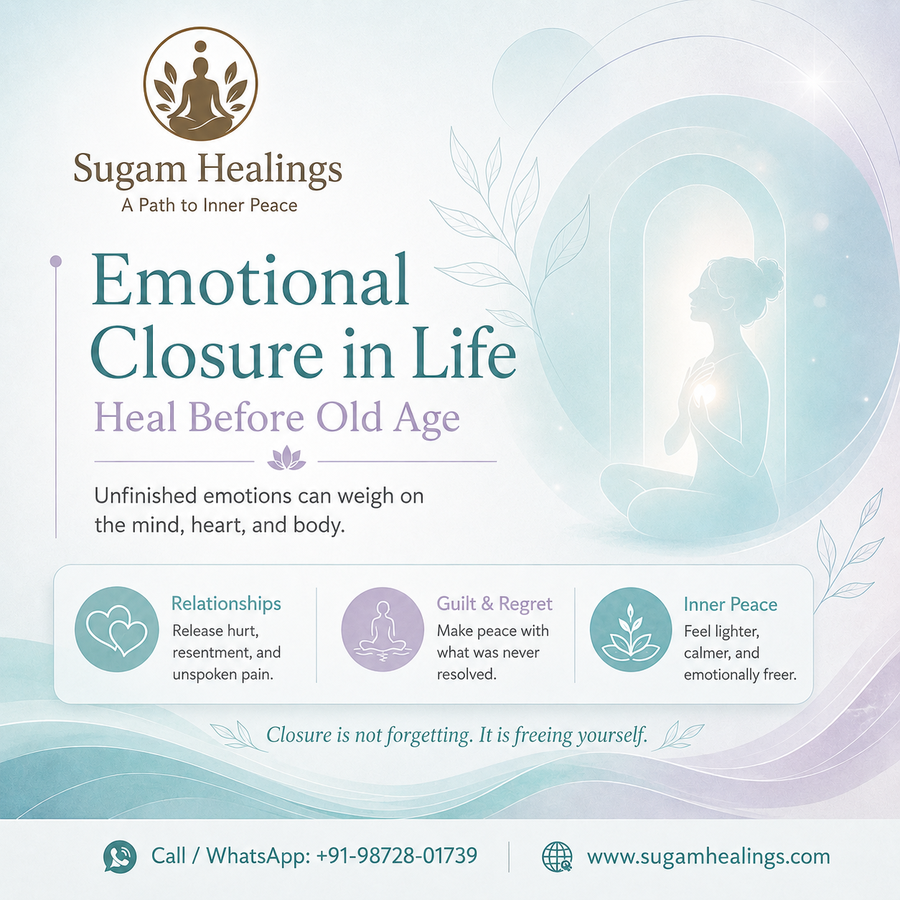
Emotional closures in life we need to Heal Before Old Age. It is one of the most important steps toward inner peace, healthy aging, and emotional freedom. Sometimes a movie, a conversation, or a life incident reminds us that unfinished emotions can stay alive within us for years.
Closure does not always mean getting an apology, explanation, or acceptance from another person. Instead, it often means making peace within ourselves so that regret, guilt, anger, grief, and attachment do not keep disturbing our mind, body, and soul.
When painful matters remain unresolved, they may affect sleep, relationships, nervous-system balance, emotional health, and peace of mind. However, Alzheimer’s disease and dementia are complex medical conditions, so emotional wounds should not be presented as their direct cause.
Therefore, timely closure is not a medical guarantee against memory problems. However, it can reduce emotional burden, support mental peace, and help us age with greater calmness, clarity, and self-acceptance.
Table of Contents
ToggleWhat Is Emotional Closure in Life?
Emotional closure is the inner process of completing something that still feels unfinished in the heart or mind. It may be related to a person, memory, relationship, loss, regret, dream, or painful life experience.
In simple words, closure means accepting what happened, understanding what it taught us, and releasing what we no longer want to carry. Moreover, it means choosing peace instead of allowing the past to control our present.
Closure is not forgetting, approving, or justifying what happened. On the other hand, it means freeing yourself from the emotional chains of an unfinished past.
Why Closure Becomes Important as We Grow Older
In younger years, people often stay busy with family, work, responsibilities, and survival. As a result, they may suppress pain and keep moving because life keeps demanding action.
However, as life slows down with age, unprocessed memories may begin to rise again. Therefore, old age can bring questions like, “Why did I stay silent?”, “Why did I never forgive?”, or “Why did I not live for myself?”
This is why emotional closure before old age matters deeply. It helps us grow older with peace, rather than bitterness, guilt, loneliness, and emotional heaviness.
Different Types of Closure We Need in Life
Relationship Closure
Relationship closure may be needed with parents, spouse, children, siblings, friends, colleagues, or someone we deeply loved. It often becomes necessary when there has been betrayal, rejection, abandonment, emotional neglect, or long silence.
For example, a person may spend years waiting for a parent to say, “I am proud of you.” However, closure may come when they accept that the parent may not have had the emotional maturity to express love.
Closure with Parents
Parental wounds can remain very deep because parents are our first emotional world. Many adults still carry childhood pain linked to criticism, comparison, neglect, control, favouritism, or lack of affection.
However, closure with parents does not always mean blaming them. Instead, it means accepting two truths together: they may have done their best, and still, your pain was real.
Closure with Children
Parents may also need closure with children, especially when they carry guilt about being unavailable, strict, unaware, or emotionally distant. In addition, they may feel hurt when adult children distance themselves or do not understand their emotions.
Closure may begin with a sincere apology, honest communication, and acceptance of the child’s individual journey. Therefore, love must sometimes be expressed without control, expectation, or emotional pressure.
Closure with Spouse or Partner
Marriage and long-term relationships can carry years of unsaid pain. Moreover, some people remain physically together but emotionally incomplete, while others separate but stay attached through anger or guilt.
Closure may be needed after betrayal, emotional neglect, abuse, divorce, loneliness, or unmet expectations. However, in unsafe relationships, closure may require boundaries, legal support, and healing, not reconciliation.
Closure with Lost Love
Some people carry the memory of a love that could not become a complete relationship. As a result, they may compare every future relationship with that unfinished emotional story.
Closure means accepting that love may have been real, but the journey remained incomplete. Therefore, one can honour the memory, learn from it, and return fully to life.
Closure with the Deceased
Many people suffer because someone passed away before they could say sorry, thank you, I love you, or goodbye. Consequently, grief may remain emotionally incomplete for years.
A letter, prayer, meditation, ritual, or visit to a meaningful place can help create closure. Moreover, saying what remained unsaid can bring deep emotional release.
Closure with Guilt and Regret
Guilt often comes from mistakes, missed responsibilities, or words spoken in pain. However, healthy guilt guides correction, while toxic guilt becomes lifelong self-punishment.
Regret usually comes from roads not taken, dreams not followed, or choices made under pressure. Therefore, closure with regret means turning pain into wisdom and asking, “What can I still do now?”
Closure with Anger, Resentment, and Shame
Anger often hides hurt, while resentment is anger that has stayed too long. As a result, it can make a person bitter, reactive, suspicious, or emotionally closed.
Shame, on the other hand, says, “Something is wrong with me.” Closure with shame means bringing compassion to the hidden parts of ourselves and moving from self-judgment to self-acceptance.
Closure with Unfulfilled Dreams
Not every dream gets completed because life brings responsibilities, fear, money pressure, health issues, or timing challenges. However, an unfulfilled dream does not always need to become lifelong sadness.
For example, someone who wanted to become a teacher may later mentor children, conduct workshops, or guide others. Therefore, the form of the dream may change, but its spirit can still live.
Closure with Money, Property, and Responsibilities
Practical closure is also emotional closure because unclear financial matters often create family bitterness. Property disputes, unpaid loans, unclear inheritance, and undocumented wishes can disturb families even after death.
Therefore, making a will, organizing documents, settling dues, and communicating important wishes are acts of responsibility. Moreover, they protect the next generation from confusion and conflict.
Closure with Self
Self-closure may be the most important closure of all. Many people need to forgive themselves for not knowing better, staying silent, trusting the wrong person, or abandoning their own needs.
However, self-forgiveness does not mean denying responsibility. Instead, it means accepting your journey and choosing to live the remaining life with more awareness, courage, and compassion.
Why Do We Create Situations That Need Closure?
Many wounds remain open because emotions were never expressed. For example, people stay silent to avoid conflict, protect family image, save relationships, or because they were never taught emotional expression.
Sudden endings also create unfinished emotions. Death, betrayal, breakup, illness, job loss, migration, or separation may end something before the heart feels ready.
In addition, lack of apology or explanation can keep the mind searching for answers. Meanwhile, the heart keeps waiting for justice, validation, or emotional repair.
Childhood conditioning also plays a major role. Many people were told, “Don’t cry,” “Forget it,” “Be strong,” or “Don’t talk about family matters.”
As a result, they become adults who function well outside but feel emotionally incomplete inside. Therefore, repeated life patterns may continue until the root wound is understood and healed.
How Unresolved Emotions Affect Life
Unresolved emotions may show up as anxiety, overthinking, disturbed sleep, emotional heaviness, irritability, and relationship difficulties. In addition, they may create guilt, shame, loneliness, body tension, and loss of meaning.
However, it is important to speak responsibly about brain health. Chronic stress and trauma may affect well-being and cognitive health, but they should not be described as the direct cause of Alzheimer’s or dementia.
Therefore, the safer understanding is this: unresolved emotional stress can affect mental peace, sleep, nervous-system balance, relationships, and quality of life. Consequently, emotional healing becomes important for peaceful living and healthy aging.
How to Create Emotional Closure in Life
Accept What Is Unfinished
The first step is honesty because we cannot heal what we keep denying. Therefore, ask yourself what still hurts, whom you are angry with, and what you wish you had said.
You can also ask, “What memory still has emotional charge?” and “What am I still waiting for?” These questions gently reveal where closure is needed.
Speak Where It Is Safe
If the relationship is safe, a calm conversation can create healing. However, the purpose should be expression and understanding, not blame or emotional attack.
You may say, “I want to share something that has stayed with me.” In addition, you can say, “I am not here to fight; I want peace and clarity.”
Write an Unsent Letter
Writing an unsent letter is a powerful closure practice. It allows the heart to express what was suppressed, even when direct conversation is not possible.
Write what happened, how it affected you, what you needed then, and what you are ready to release now. Moreover, remember that the purpose is emotional release, not necessarily sending the letter.
Apologize and Make Amends
A sincere apology can heal years of distance. However, an apology should honour the other person’s pain, not simply reduce your guilt.
You may say, “I understand that my actions hurt you, and I am sorry.” In addition, make amends where possible and commit to more conscious behaviour.
Forgive Without Forcing Reconciliation
Forgiveness and reconciliation are not the same. Forgiveness is an inner release, while reconciliation requires safety, accountability, and changed behaviour.
Therefore, you can forgive someone and still maintain distance. This is especially important when the relationship was unsafe, abusive, or emotionally harmful.
Create a Ritual of Release
Rituals help the subconscious mind understand completion. For example, you may light a candle, write and tear a letter, visit a meaningful place, or offer a prayer.
You can also meditate and visualize returning emotional burdens that were never yours to carry. As a result, the mind and body may begin to feel lighter.
Heal the Inner Child
Many adult closures are actually childhood closures. The inner child may still be waiting for love, protection, validation, apology, or permission to feel.
Inner child healing helps us say, “You were not wrong for feeling hurt,” and “You are safe now.” Therefore, it brings compassion to the younger self who carried pain silently.
Seek Professional Support
Some closures are too deep to process alone, especially where there is trauma, grief, abuse, panic, or dissociation. Therefore, professional support can create safety and structure.
Therapeutic support can help you process emotions, regulate the nervous system, understand subconscious patterns, and release old pain without overwhelming yourself. Moreover, it allows healing to happen at a deeper and safer pace.
Make Practical Closures
Emotional peace also requires practical clarity. Therefore, organize documents, make a will, clear financial obligations, resolve pending matters, and communicate important wishes.
This is not negative thinking. Instead, it is responsible living that prevents confusion, conflict, and emotional burden for loved ones.
Begin Before It Is Too Late
Do not wait for old age, illness, or deathbed moments to create closure. Say thank you, say sorry, express love, clarify misunderstandings, and release resentment while time is still available.
Moreover, take care of your health, honour your dreams, and live more truthfully now. As a result, life becomes lighter, more peaceful, and more complete.
A Simple Emotional Closure Practice
Sit quietly, breathe slowly, and bring one unresolved person or event to mind. Then ask yourself what you are still carrying, what you needed then, and what you can give yourself now.
After that, gently say, “I acknowledge what happened, I honour what I felt, and I release what I no longer need to carry.” Finally, remind yourself, “I choose peace, healing, and freedom.”
Final Thought on Emotional Closure
Closure is not about erasing the past. Instead, it is about removing the emotional chains that keep us tied to it.
When we consciously heal, forgive, express, accept, and release, we create space for peace. Therefore, timely closure helps us live with less burden, age with more grace, and leave this world with greater completeness.