Call Us : +91-98728-01739 or Email us: sugamhealings@yahoo.com

Why Do I Feel Unsafe Even When Nothing Is Wrong?
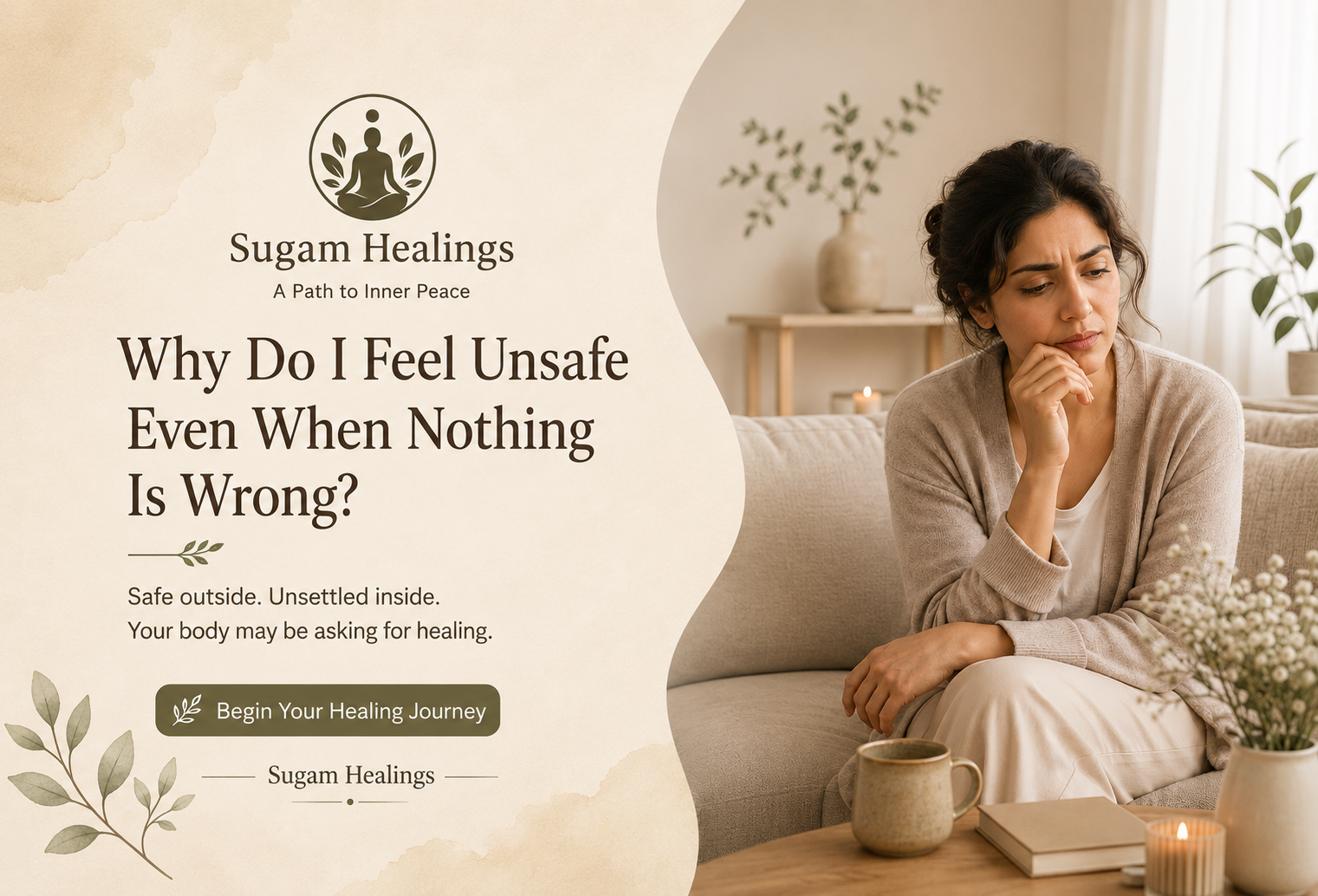
Have you ever asked yourself, “Why Do I Feel Unsafe Even When Nothing Is Wrong?” This question can feel confusing because your outer life may look normal, yet your inner world may feel tense, alert, or restless.
Moreover, you may not be facing any visible danger. However, your body may still behave as if something bad is about to happen.
This experience is more common than many people realize. In fact, many people who are healing from trauma, anxiety, grief, emotional wounds, or relationship pain often describe this exact feeling.
Table of Contents
ToggleWhy Do I Feel Unsafe Even When Nothing Is Wrong?
When you feel unsafe without a clear reason, it does not mean you are weak or overthinking. Instead, it may mean that your nervous system has learned to stay alert for danger.
Sometimes, the mind knows that everything is fine. However, the body may still carry old memories, fears, and emotional impressions from the past.
This is why many people search for answers to feeling unsafe for no reason. They may feel uneasy at home, restless in relationships, anxious in silence, or uncomfortable when life becomes peaceful.
When the Nervous System Feels Unsafe
Your nervous system is designed to protect you. Therefore, when it has experienced stress, shock, fear, rejection, abandonment, or emotional pain, it may become highly sensitive.
As a result, even small situations can feel threatening. For example, a delayed message, a raised voice, silence, criticism, or uncertainty may create strong emotional reactions.
When the nervous system feels unsafe, the body may enter survival mode. Consequently, you may feel anxious, guarded, numb, irritated, or emotionally exhausted.
Why Safety Can Feel Unfamiliar
For some people, peace does not feel peaceful. Instead, peace feels unfamiliar because their system is used to tension, pressure, or emotional unpredictability.
Moreover, if you grew up around criticism, emotional distance, conflict, fear, or instability, your body may have learned that safety can disappear anytime. Therefore, calm moments may also create discomfort.
This is not your fault. However, it is important to understand that your body may be responding to old conditioning rather than present reality.
Common Signs That You Feel Unsafe Inside
You may feel unsafe inside even when nothing is visibly wrong. For example, you may constantly scan people’s moods or worry that something will go wrong.
In addition, you may feel tense in your shoulders, chest, stomach, or jaw. You may also feel restless, emotionally heavy, or unable to relax fully.
Some people become people-pleasers because they want to avoid conflict. Meanwhile, others withdraw, shut down, or become emotionally numb to protect themselves.
Emotional Wounds and the Feeling of Unsafety
Emotional wounds are not always dramatic. Sometimes, they are created through repeated experiences of being ignored, misunderstood, judged, rejected, or unsupported.
Over time, these experiences can create deep inner beliefs. For example, you may start believing, “I am not safe,” “I cannot trust people,” or “Something will go wrong.”
Consequently, your present emotions may be connected to past pain. This is why healing often needs to go deeper than positive thinking.
Trauma Does Not Always Look Like Trauma
Many people believe trauma only comes from extreme events. However, trauma can also come from emotional neglect, repeated criticism, relationship betrayal, childhood fear, grief, or long-term stress.
Furthermore, trauma is not only about what happened. It is also about how your body and mind stored the experience.
Therefore, you may not remember a major event, yet your body may still carry emotional fear. This can explain why you feel unsafe even when life appears normal.
The Role of the Subconscious Mind
The subconscious mind stores emotional memories, beliefs, patterns, and protective responses. Therefore, it may continue to react based on old experiences.
For example, if love once felt unsafe, closeness may now create anxiety. Similarly, if speaking up once led to rejection, expressing yourself may now feel risky.
As a result, your conscious mind may say, “Nothing is wrong.” However, your subconscious mind may still say, “Be careful.”
Why Anxiety Often Feels Like Unsafety
Anxiety is often the body’s way of saying that it does not feel secure. Therefore, it may show up as overthinking, fear, restlessness, sleep disturbance, or emotional pressure.
In addition, anxiety may make you search for certainty. You may want constant reassurance, clear answers, or control over every situation.
However, true healing does not come only from controlling life. Instead, it comes from helping the body feel safe from within.
How Relationship Pain Can Trigger Unsafety
Relationships can deeply activate old emotional wounds. For example, a partner’s silence may trigger abandonment fear, while criticism may trigger shame.
Moreover, even healthy relationships may feel uncomfortable if your nervous system is not used to safety. You may expect rejection, conflict, or emotional withdrawal.
Consequently, you may react strongly to small things. However, the deeper issue may not be the present situation alone, but the wound it touches.
Spiritual Awakening and Inner Unsafety
Some people experience emotional unsafety during spiritual awakening or deep inner transformation. As old patterns rise, the mind and body may feel unsettled.
In addition, spiritual growth often brings hidden emotions to the surface. Therefore, you may feel sensitive, restless, or emotionally raw for some time.
However, this phase can also become a doorway to healing. With proper guidance, you can understand what is being released and what needs compassion.
Why Positive Thinking May Not Be Enough
Positive thinking can help, but it may not reach the deeper layers of emotional pain. Therefore, repeating affirmations may feel difficult when the body does not believe them.
For example, saying “I am safe” may not work if your nervous system still feels threatened. In such cases, healing needs to include the body, emotions, and subconscious mind.
Moreover, true healing is not about forcing yourself to feel okay. It is about gently helping your inner system understand that the danger is no longer present.
How Healing Work Can Help You Feel Safe Again
The long-tail question many people silently carry is: why do I feel unsafe even when nothing is wrong and how healing work can help? Healing work helps by addressing the emotional root, not just the surface symptom.
Through guided healing, you begin to understand your triggers, body responses, emotional wounds, and subconscious patterns. As a result, you stop blaming yourself and start understanding yourself.
Healing also helps your nervous system move from survival mode toward calmness. Therefore, you gradually feel safer in your body, relationships, and daily life.
Healing Modalities That Support Emotional Safety
Different healing approaches can support emotional safety. For example, trauma healing helps release stored fear and emotional pain from past experiences.
Inner child healing can help you reconnect with younger parts of yourself that felt afraid, unseen, or unsupported. Moreover, hypnotherapy may help access subconscious beliefs that keep creating fear.
Past life regression, mindfulness, energy healing, and somatic work may also support deeper emotional release. However, the right approach depends on your history, comfort, and readiness.
Practical Ways to Support Yourself
You can begin by noticing your body without judging it. For example, place a hand on your heart and gently remind yourself that you are in the present moment.
In addition, slow breathing, grounding, journaling, and mindful movement can help your nervous system settle. However, these practices work best when done with patience.
You can also reduce emotional overload by creating safe routines. Moreover, spending time with supportive people can help your system slowly trust connection again.
When to Seek Healing Support
You may benefit from healing support if the feeling of unsafety is affecting your relationships, sleep, decisions, or emotional balance. Moreover, support can help if you feel stuck despite trying to manage things alone.
It is also helpful when your reactions feel stronger than the situation. For example, small triggers may create deep fear, anger, sadness, or shutdown.
Therefore, seeking support is not a sign of weakness. Instead, it is a step toward understanding your inner world with compassion and clarity.
Begin Your Healing Journey with Sugam Healings
If you often wonder why you feel unsafe even when nothing is wrong, you do not have to carry this confusion alone. At Sugam Healings, you can explore trauma healing, inner child work, hypnotherapy, past life regression, mindfulness, and emotional healing in a compassionate space.
Moreover, healing sessions can help you understand your triggers, calm your nervous system, and reconnect with inner safety. With gentle guidance, you can begin moving from fear, heaviness, and emotional alertness toward calmness, clarity, and self-trust.
If your emotions are asking for healing, listen to them with kindness. Begin your healing journey with Sugam Healings and allow yourself to feel supported from within.
FAQs
Why do I feel unsafe even when nothing is wrong?
You may feel unsafe because your nervous system is responding to old emotional wounds or trauma patterns. Therefore, even when life looks normal, your body may still remain alert for danger.
Is feeling unsafe for no reason connected to anxiety?
Yes, feeling unsafe for no reason can be connected to anxiety. Moreover, anxiety often appears when the body does not feel emotionally secure, even if there is no visible threat.
What does it mean when my nervous system feels unsafe?
When your nervous system feels unsafe, your body may stay in survival mode. As a result, you may feel tense, restless, numb, overwhelmed, or constantly worried.
Can trauma healing help me feel safe again?
Yes, trauma healing can help you understand and release stored emotional pain. Consequently, your body can slowly learn that it does not need to stay guarded all the time.
How can healing work help when I feel unsafe inside?
Healing work helps by addressing emotional wounds, subconscious beliefs, and nervous system patterns. Therefore, it supports deeper safety rather than only temporary relief.