Call Us : +91-98728-01739 or Email us: sugamhealings@yahoo.com
Signs You May Need Trauma Healing
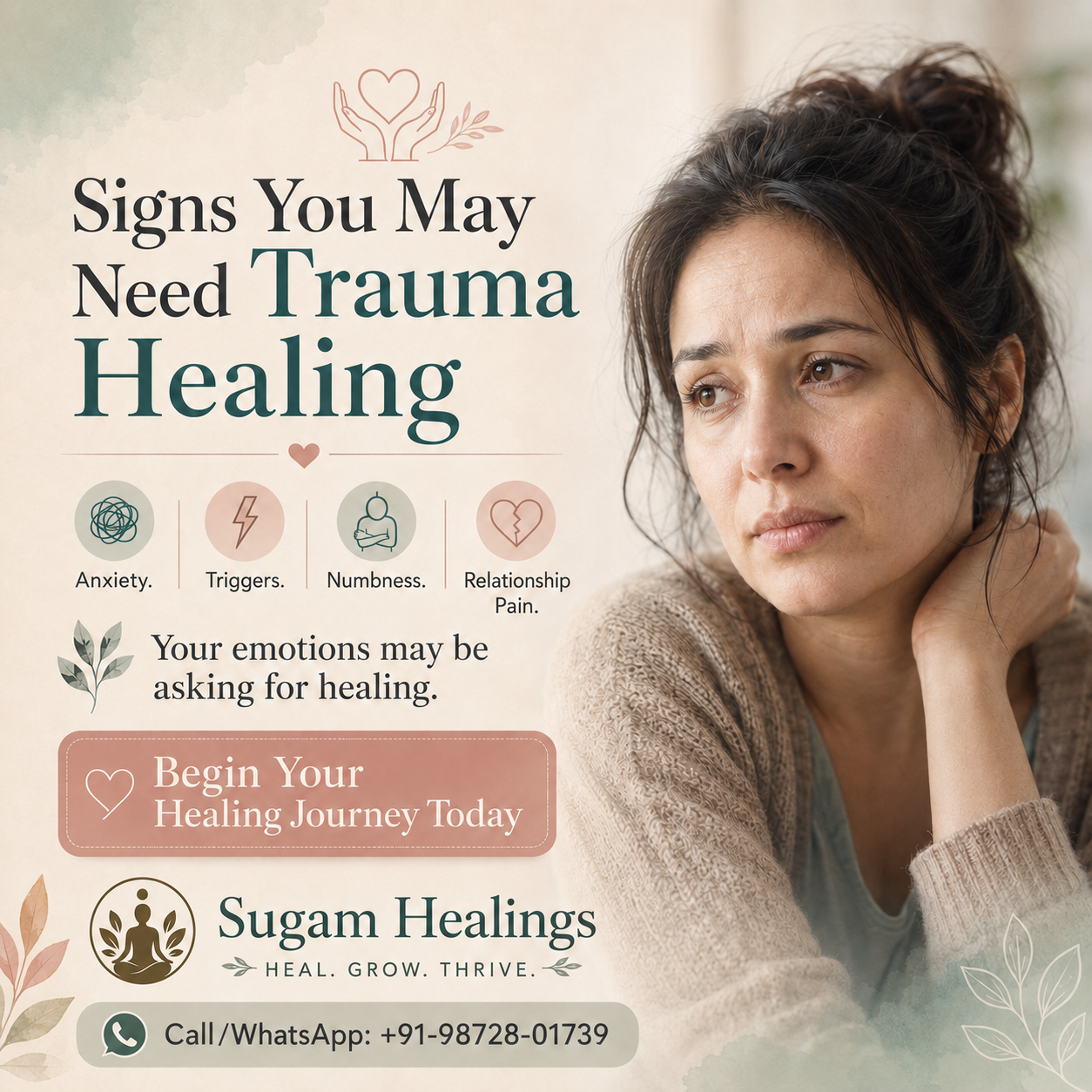
Signs You May Need Trauma Healing are not always obvious. Sometimes, trauma does not appear as one big memory or one painful event. Instead, it may show up as anxiety, emotional pain, fear, numbness, relationship struggles, or a constant feeling that something is wrong inside.
Many people continue with life while carrying deep emotional wounds. However, the body and mind often remember what the conscious mind tries to forget. Therefore, understanding the signs you may need trauma healing support for emotional pain can help you take the first step toward relief, clarity, and inner safety.
Table of Contents
ToggleWhat Is Trauma Healing?
Trauma healing is a gentle process that helps you understand, release, and transform emotional wounds. These wounds may come from childhood experiences, loss, abuse, neglect, betrayal, sudden shock, or long-term stress.
However, trauma is not only about what happened to you. It is also about how your nervous system, emotions, and subconscious mind responded to that experience. As a result, unresolved trauma can continue to affect your thoughts, relationships, health, and sense of self.
Trauma healing support helps you reconnect with your inner world safely and compassionately. Moreover, it allows you to understand your trauma response symptoms without judging yourself.
Why Trauma Does Not Always Look Like Trauma
Many people believe trauma must be dramatic or extreme. However, trauma can also come from repeated emotional pain, feeling unseen, growing up in fear, or living with constant pressure.
For example, a child who was often criticized may grow into an adult who feels “not good enough.” Similarly, someone who faced emotional neglect may struggle to trust love, even when it is available.
Therefore, trauma healing is not about blaming the past. Instead, it is about understanding how past experiences may still be shaping your present life.
Signs You May Need Trauma Healing Support
Recognizing the signs can be deeply empowering. Moreover, it can help you stop thinking that you are “too sensitive” or “overreacting.”
Below are some common signs that you may benefit from trauma healing support.
You Feel Anxious Most of the Time
Anxiety can be one of the most common trauma response symptoms. You may feel restless, fearful, or tense without knowing the exact reason.
However, this anxiety may not be random. It may be your nervous system trying to protect you from a danger that no longer exists. As a result, your body may stay in survival mode even when life looks normal from the outside.
You may overthink every situation, fear the worst, or feel unable to relax. Therefore, trauma healing can help you understand the deeper roots of anxiety and gently calm the nervous system.
You React Strongly to Small Triggers
Sometimes, a small comment, tone of voice, delay, or rejection can create a big emotional reaction. You may feel anger, fear, shame, or sadness very quickly.
However, your reaction may be connected to an old wound. For example, a simple disagreement may remind your subconscious mind of past abandonment or criticism.
In addition, triggers often show where healing is needed. Trauma healing support can help you separate the present moment from past pain.
You Feel Emotionally Numb or Disconnected
Not everyone with trauma feels intense emotions. Some people feel almost nothing. They may feel detached from themselves, others, or life itself.
This numbness is often a protective response. Meanwhile, the mind may disconnect from painful feelings because they once felt too heavy to handle.
As a result, you may find it difficult to feel joy, love, excitement, or peace. Trauma healing can slowly help you reconnect with your emotions in a safe and balanced way.
You Keep Repeating Painful Relationship Patterns
Unhealed trauma often shows up in relationships. You may attract emotionally unavailable people, fear abandonment, or stay in unhealthy situations.
However, these patterns are not signs of weakness. They may reflect old emotional conditioning, attachment wounds, or subconscious beliefs about love and safety.
For example, if love felt unpredictable in childhood, stability may feel unfamiliar in adulthood. Therefore, trauma healing can help you understand relationship pain at a deeper level.
You Struggle With Self-Worth
Many emotional wounds create a deep feeling of not being enough. You may constantly doubt yourself, compare yourself with others, or feel guilty for having needs.
Moreover, you may find it hard to receive love, appreciation, or support. Even when people value you, something inside may reject it.
This can happen when old wounds create limiting beliefs. Trauma healing support helps you identify and release these beliefs with compassion.
You Feel Stuck Even After Trying Many Things
You may have read self-help books, practiced affirmations, tried meditation, or pushed yourself to “think positive.” However, the same emotional pain may keep returning.
This does not mean you failed. Instead, it may mean the wound is stored deeper in the subconscious mind, body, or nervous system.
Consequently, trauma healing works at a deeper level than surface thinking. It helps you address emotional roots rather than only managing symptoms.
You Carry Grief, Anger, or Sadness for a Long Time
Some emotions remain because they were never fully processed. You may carry grief from loss, anger from betrayal, or sadness from childhood pain.
However, many people suppress these emotions to survive. Over time, these emotions may appear as fatigue, irritability, anxiety, or emotional heaviness.
In addition, unprocessed grief can affect your ability to move forward. Trauma healing creates space for these emotions to be felt, understood, and released.
You Feel Unsafe Even When Nothing Is Wrong
A major sign of trauma is a constant lack of inner safety. You may feel alert, guarded, or tense, even in peaceful situations.
This happens because trauma affects the nervous system. As a result, your body may continue scanning for danger.
Therefore, healing is not only about changing thoughts. It is also about helping your body feel safe again.
Understanding Trauma Response Symptoms
Trauma response symptoms are the ways your mind and body try to protect you. These responses may include fight, flight, freeze, or fawn.
A fight may look like anger, control, or defensiveness. Flight may appear as overworking, overthinking, or avoiding stillness. Freeze may feel like numbness, confusion, or shutdown. Fawn may show up as people-pleasing or fear of saying no.
However, these responses are not character flaws. They are survival strategies that once helped you cope. Trauma healing gently helps you update these old survival patterns.
How Trauma Healing Support Can Help
Trauma healing support provides a safe space to explore emotional pain without judgment. Moreover, it helps you understand why certain patterns keep repeating.
Healing may include inner child work, hypnotherapy, mindfulness, subconscious healing, regression therapy, emotional release, or body-based awareness. However, the exact process depends on your needs and readiness.
In addition, trauma healing does not force you to relive painful memories. A trauma-informed approach moves gently and respects your emotional safety.
The Role of the Subconscious Mind in Healing
The subconscious mind stores memories, beliefs, emotional impressions, and survival patterns. Therefore, many reactions come from subconscious programming rather than conscious choice.
For example, you may consciously want love but subconsciously fear closeness. Similarly, you may want success but feel unsafe being visible.
Trauma healing helps bring these hidden patterns into awareness. As a result, you can begin to choose differently instead of repeating old emotional cycles.
Spiritual Growth and Trauma Healing
Many people begin trauma healing during a period of spiritual awakening or personal transformation. They may feel called to understand themselves more deeply.
However, spiritual growth is not only about meditation, positivity, or higher awareness. It also includes meeting the wounded parts of yourself with love and honesty.
Therefore, trauma healing can become a powerful path of inner transformation. It helps you return to your authentic self with more compassion, clarity, and peace.
When Should You Seek Trauma Healing Support?
You may seek trauma healing support when emotional pain starts affecting your daily life, relationships, sleep, work, or self-worth. Moreover, support can help when you feel stuck despite trying to heal on your own.
You do not need to wait until life becomes unbearable. In fact, early support can prevent emotional wounds from becoming deeper patterns.
If you recognise the signs you may need trauma healing support for emotional pain, it may be time to explore guided healing. Taking support is not a sign of weakness. Rather, it is an act of self-respect.
What Healing Can Feel Like
Healing may begin with small shifts. You may feel calmer, clearer, lighter, or more connected to yourself.
However, healing is not always linear. Some days may feel peaceful, while others may bring old emotions to the surface.
This is normal. Moreover, with the right support, you can learn to move through these emotions safely instead of feeling overwhelmed by them.
Begin Your Healing Journey With Sugam Healings
If you relate to these signs, you do not have to carry your emotional pain alone. Sugam Healings offers compassionate trauma healing support for emotional wounds, anxiety, relationship pain, inner child wounds, subconscious patterns, and personal transformation.
Through a gentle and trauma-informed approach, you can begin to understand your emotions, release old pain, and reconnect with inner calm. Therefore, if your heart feels ready, consider exploring a healing session or guidance with Sugam Healings.
Healing begins when you feel safe enough to listen to yourself.
FAQs
What are the common signs that you may need trauma healing?
Common signs you may need trauma healing include anxiety, emotional numbness, overthinking, relationship struggles, low self-worth, strong triggers, and unresolved sadness. However, these signs can look different for every person.
How do I know if I need trauma healing support?
You may need trauma healing support if emotional pain keeps affecting your peace, relationships, confidence, or daily life. Moreover, support may help if you feel stuck despite trying self-help methods.
What are trauma response symptoms?
Trauma response symptoms are survival reactions such as fight, flight, freeze, or fawn. For example, they may show up as anger, avoidance, shutdown, people-pleasing, anxiety, or fear.
Can trauma healing help with anxiety and emotional pain?
Yes, trauma healing can help you understand the deeper roots of anxiety and emotional pain. As a result, you may begin to feel calmer, safer, and more emotionally balanced.
Is trauma healing only for people with major trauma?
No, trauma healing is not only for major trauma. It can also help with childhood wounds, emotional neglect, grief, relationship pain, criticism, rejection, and long-term stress.